


Saint Margaret’s Anglican Church Budapest, Hungary
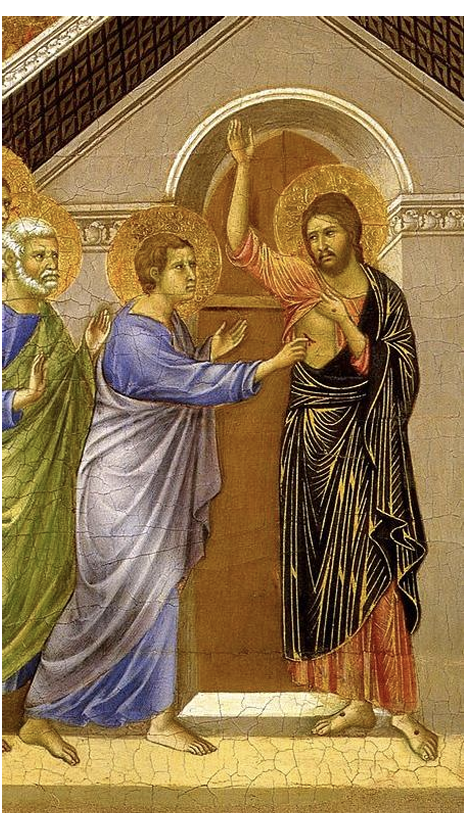
“Jesus got up and followed him with his disciples.” Many years ago, during a period in my life when I worked outside the Church and in a business setting, I took a class in accounting at a nearby university as part of my business degree education, my MBA. It was a good class, and I learned a lot from the knowledgeable and very patience professor, a businessman himself by the way, originally from South Asia, although I do not remember whether from India or Pakistan. He also had a sense of humour about his profession, and on one occasion, perhaps after a long and frustrating day at work, bemoaned the fact that, as he saw it, accountants get little or no respect whether in business or academia. “I have traveled all over the world,” he told us at the beginning of class that evening, “And have seen statues to many great army generals, illustrious politicians, and even an occasional bishop or two, but I have never yet seen a statue erected to an outstanding accountant.” Neither have I, come to think of it. “As Jesus was walking along, he saw a man called Matthew sitting at the tax booth; and he said to him, ‘Follow me.’” Matthew, the soon-to-be Apostle, was in other words a first-century accountant, a tax accountant to be precise. Now, taxes in ancient Palestine were collected, s you may know, in a variety of ways but mostly, it seems, by government-sanctioned private tax agents who took home a portion of their collections as wages. Sort of like working on commission, I suppose; yet, a system, as you can imagine, rife with the potential for abuse, making such tax agents or accountants as Matthew suspect, both deeply distrusted and deeply disliked across society. Like my professor in Minnesota, they got little respect in ancient Palestine either. Yet, it is to Matthew, the accountant, that Jesus almost casually and without thinking issues his call to discipleship. He must have instantly seen in Matthew something which others missed; an integrity perhaps that belied the reputation of his profession. “Follow me,” says our Lord, and Matthew “got up and followed him,” as the text tells us, apparently no questions asked. Imagine the bewilderment of Matthew’s clients queuing at the entrance to his tax booth, as Matthew quietly closed his excel spreadsheets and laptop and simply left, presumably never to return. And what did hard-nosed, forint-and-fillér, pound-and-pence Matthew see in Jesus…? Good question. Surely, no lucrative commissions, no kickbacks. Just a simple invitation and command; and an opportunity to bring the riches of the Gospel to others. Follow me, say Jesus. And so, he does. Matthew, called Levi in other Gospel accounts by the way, does not figure prominently in the Gospels. He has no speaking parts. No words to say. Typical accountant, perhaps. But his actions in a sense speak louder than words. He follows and becomes a disciple and an apostle. But our Gospel account today does not end with the calling of Matthew. A leader of the Synagogue, unlike a tax accountant a prominent person in that ancient society, approaches our Lord, at dinner no less, with the sad message that, “my daughter has just died.” But “come,” he implores Jesus, “and she will live.” And apparently even before dessert and coffee were served, “Jesus got up and followed him with his disciples.” Our Lord’s call to Matthew, “Follow me,” is now echoed in the call of the bereaved but faith-filled leader of the Synagogue. “Come and lay your hand on her, and she will live” And that is precisely what Jesus and the disciples do, presumably including Matthew. For disciples of the Gospel, the call to follow always involves following the call, the call to serve others; the call to serve those in need and distress such as the synagogue leader and his daughter; to bring the Gospel message of life and healing to those in danger of despair and death, whenever they call out; whoever and wherever they may be. The call to discipleship, the call to serve, has not changed much over the centuries. And our Lord still challenges us, as he did Matthew, with his simple words, “Follow me,” whether we be accountants or actuaries, journalists or janitors, priests or poets. And the people around us, be they church or synagogue leaders or someone like the poor woman in the Gospel account ailing for twelve years yet brave enough to reach forward and touch the fringe of Jesus’ cloak, the people around us still reach out to us, the disciples of today. Sometimes when, like Matthew, we least expect it. Sometimes when we are busy about the business of making business. Follow me. Come. Well, I am happy to report that there are statues depicting accountants after all. In the case of Matthew, the Apostle, there are, according to AI, at least five of them; one of which is an unfinished masterpiece of Michaelangelo, originally intended for the Cathedral in Florence. An unfinished masterpiece. That pretty much says it all. For, all Apostles, all disciples, all of us, are unfinished masterpieces. Or to put it in terms Matthew himself might appreciate, each disciple represents unrealised capital gains on the only excel balance sheet that counts, unrealised gains with no risk of depreciation and unlimited upside potential. Just like the Gospel. Amen. The Revd Canon Dr Frank Hegedűs


Comments