


Saint Margaret Anglican Episcopal Church Budapest, Hungary Isaiah 44:6-8; Psalm 86:11-17; Romans 8:12-25; Matthew 13:24-30,36-43
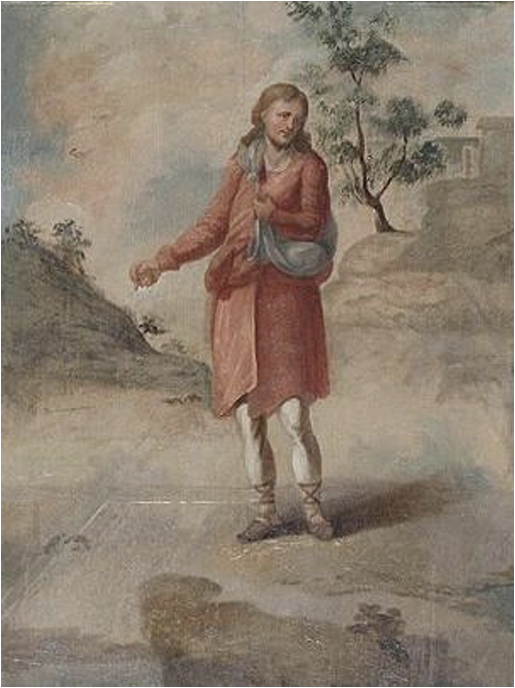
“Explain to us the parable of the weeds of the field.” There are only two parables of our Lord for which he offers, at the prompting of the disciples, a detailed explanation of the meaning. And the story we just heard from the Gospel of Matthew, the Parable of the Wheat and the Tares, as it used to be called, is one of them. Tares by the way is an old word for weed, and not the kind you smoke. Now, some New Testament scholars, perhaps tongue in cheek, suggest that Jesus’ own interpretation of this parable as, essentially, an allegory, as we just heard it, makes it even more difficult to understand than it would have been taken on its own. “Explain to us the parable of the weeds of the field,” demand the disciples. Let’s give it a go. Those same scholars, by the way, biblical and botanical, assume that the weed of today’s story is something called darnel, a kind of pernicious plant common in the Middle East and Africa even today. I must admit I had never heard of it. And darnel has the unique characteristic of looking exactly like wheat throughout most of its growing cycle. Its stalks are in other words virtually indistinguishable from those of wheat, as are its leaves and stems. It would seem to represent a classic example of evolutionary biology, specifically, an example of plant mimicry, an important survival strategy in the world of weeds apparently. Darnel seed, inadvertently harvested and mixed in with the wheat kernels, will make the entire crop toxic and worthless. Products made from it, bread for example, will be virtually inedible and even downright poisonous. And, as Jesus’ story makes clear, it is alas only at harvest time that darnel and its seeds, which are fortunately of a different shape and colour from grains of wheat, can be finally and readily identified and then very gingerly separated from the wheat kernels themselves. In the meantime, the wise farmer in the Middle East even today, like Jesus’ Sower, must simply wait and see which plant is which; which is to become good grain and which, bad. The farmer is forced by circumstances to cultivate and tend not only his own precious wheat crop but the enemy’s noxious weed as well, if his harvest is ultimately to be successful. And, expending time, energy, and some expense on that which is ultimately useless is not very cost-effective, to say the least, surely not in such a low-margin industry as agriculture, then or now. The farmer or sower must be patient, as is the householder in Jesus’ story. Sometimes, it is only time and patience which bring clarity, wisdom, and reward, not only in agribusiness but in life as well. After all, life itself can be deceptive. It is not always what we think it is. Appearances are deceiving, we say. Expectations are not always met. People and friends disappoint us, ghost us even. We disappoint ourselves and often enough those around us. The good and bad are as entwined and interwoven in the lives of most of us as are the roots of wheat and darnel in an ancient farmer’s field. It is not so easy sometimes to know the good from the bad; to distinguish the wholesome from the deleterious and harmful; to recognise who and what is right and true and who and what is false and misleading, fake. Or, for that matter, to be able to do anything about it, perhaps the most frustrating part of all. The message of Jesus’ Parable is as true today as it was in his time. Unscrupulous profiteers make fortunes exploiting the fundamental flaws in human nature which our Lord’s parable highlights. Politicians put their own interests before those of the people they serve. Nowadays, even petty theft is big business. And corruption is not limited to the high and mighty. For, the wheat and the weed grow not just around us but within us as well. Each of us is capable of great good and equal evil. Sometimes, even on the same day. It is a consequence of sin; a consequence of our fallen human nature. But happily for us, there is redemption; and there is the salvation which redemption brings at “the end of the harvest.” And that is what Jesus’ parable is ultimately all about: the time that is, this time of planting and growth; and the time to come, the harvest to be. Justice. There are two Sowers in the story, do not forget. “The one who sows the good seed is the Son of Man,” our Lord explains. But the enemy, the one who sows the weeds, is never far off. It still takes patience, time, and wisdom to know the wheat from the weed in the world around us, and sometimes in our own hearts. But if Jesus’ Parable is one of patience and time, waiting and the eternal, it is also for all that a story of hope. It is always mid-summer, my friends, wherever we find ourselves on life’s journey. And when the harvest comes, we need not end up in the fire with the darnel. God, in Christ, the Son of Man, has come to us in time and redeemed our history and our world and planted within each of us the good seed of salvation. We shall ultimately be united with the Lord at “the end of the age,” where we too shall “shine like the sun in the kingdom” of the Father, like the sun of mid-summer here in Hungary. In these troubling times of violence and war, of tensions and conflict among peoples and nations, of good seed and bad, the patience of Jesus’ householder is indeed what is called for, as difficult as it may be to muster at times. Explain to us the parable of the weeds of the field. If, as some New Testament scholars complain, Jesus’ own explanation of the Parable is nothing but a simplistic allegory, it is nevertheless the allegory of good and evil; the allegory of life and love. Explanation enough for any of us, I should think. It is just that simple. So, “Let anyone with ears listen.” Amen. The Rev. Canon Dr. Frank Hegedűs


Comments